Let me tell you something that might sting a little: most B2B tech companies are terrible at picking agencies. I’ve watched it happen dozens of times—smart executives, brilliant product minds, people who can dissect a P&L statement in their sleep—completely fumble when it comes to selecting a marketing partner. They get seduced by slick pitch decks, dazzled by case studies from companies that look nothing like theirs, and end up six months later wondering why their pipeline looks like a desert highway at midnight.
Here’s the thing about finding the best B2B tech agency: there is no universal best. There’s only the best for you. And figuring that out requires more self-awareness than most marketing leaders want to admit.
The Agency Landscape Has Fractured (And That’s Actually Good News)
Remember when you could count the major B2B agencies on two hands? Those days are gone. The market has splintered into a fascinating ecosystem of specialists, generalists, boutiques, and hybrid shops that defy easy categorization.
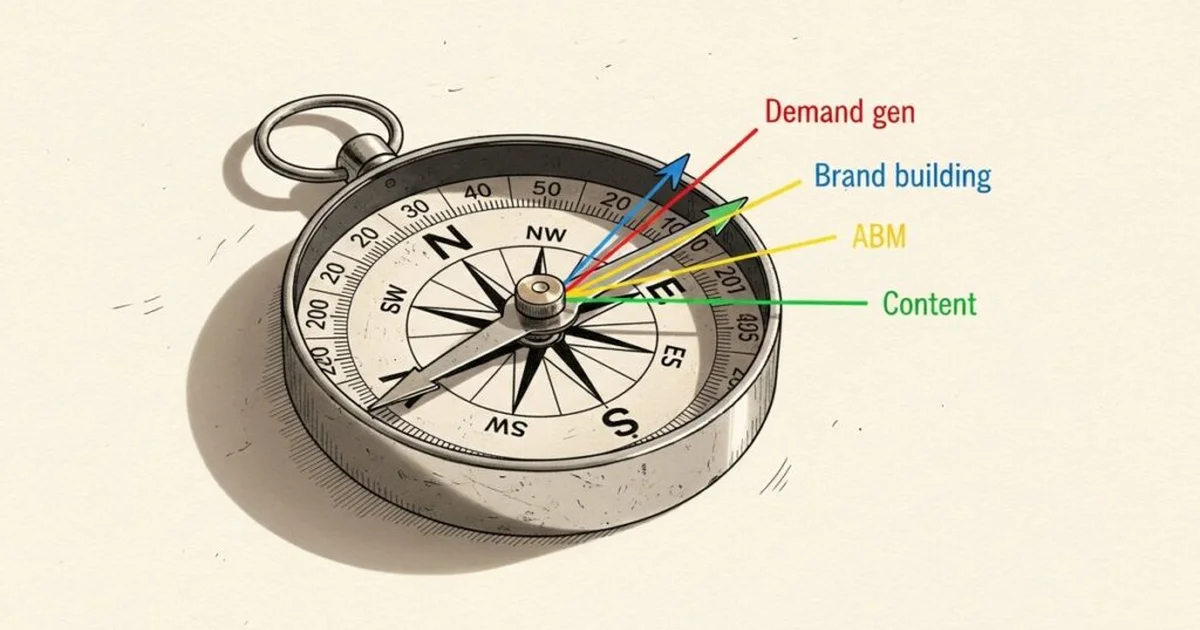
You’ve got your demand gen machines—agencies that live and breathe MQLs, SQLs, and pipeline velocity. Then there are the brand builders, the ones who’ll spend three months debating whether your logo should be 2% more teal. There are ABM specialists who can target your dream accounts with surgical precision, content factories that churn out thought leadership like it’s going out of style (spoiler: it’s not), and full-service behemoths that promise to do everything but probably won’t do any of it exceptionally well.
This fragmentation isn’t a bug—it’s a feature. It means you can find an agency that actually matches your specific needs rather than forcing a square peg into a round hole.
What Actually Matters When Evaluating B2B Tech Agencies
Let’s cut through the noise. After nearly two decades in this game, here’s what I’ve learned separates the agencies worth your budget from the ones that’ll burn through it faster than a VC-backed startup burns through runway.
1. They Understand Your Buyer, Not Just Your Product
Any agency can learn your product. Give them a week with your sales team and product docs, and they’ll be able to recite features like a well-trained parrot. But understanding your buyer? That’s different. That requires genuine curiosity about the humans on the other side of the transaction.
The best B2B tech agencies obsess over buyer psychology. They know that your enterprise software isn’t competing against other enterprise software—it’s competing against the status quo, against the fear of change, against the IT director who’s three years from retirement and doesn’t want to rock the boat. If an agency can’t articulate your buyer’s anxieties, aspirations, and decision-making dynamics, they’re not ready to market to them.
2. They Have a Point of View (And It Might Make You Uncomfortable)
Beware the agency that agrees with everything you say. If you’re hiring an agency just to execute your ideas, you’re paying premium rates for a production house. The agencies worth their retainer will push back. They’ll tell you when your messaging is too inside-baseball, when your campaign concept is derivative, when your budget allocation is optimized for vanity metrics instead of actual business outcomes.
I once worked with an agency that told me, point-blank, that our entire content strategy was aggressively mediocre. It stung. But they were right. And the strategy they proposed instead drove 3x the qualified pipeline.
3. They Can Show You the Math
Data tells you the what, but brand tells you the why—that’s my line, and I stand by it. But here’s the thing: a great B2B tech agency needs to be fluent in both languages. They should be able to show you exactly how their work connects to revenue, not just impressions or engagement rates.
Ask them about attribution. Watch their faces. If they light up and start talking about multi-touch models, incrementality testing, and pipeline influence, you’re in good hands. If they get squirmy and pivot to brand awareness is hard to measure, proceed with caution.
4. Their Team Structure Makes Sense for Your Engagement
Here’s a dirty secret of the agency world: the A-team that pitches you is rarely the team that works on your account. The silver-tongued strategist who wowed you in the pitch meeting? She’s got 15 other clients. Your day-to-day contact might be someone who graduated last spring.

Ask specifically who will be working on your business. Meet them. Assess their experience level. Understand the ratio of senior to junior talent. This isn’t about being elitist—junior talent can be phenomenal—but you need to know what you’re getting.
The Questions You Should Be Asking (But Probably Aren’t)
When you’re in the evaluation process, most companies ask the obvious questions: What’s your experience in our industry? Can you share case studies? What’s your pricing model?
Those are fine. But here are the questions that actually reveal whether an agency is right for you:
“Tell me about a campaign that failed and what you learned.” Any agency that claims they’ve never had a miss is either lying or hasn’t taken enough risks. You want partners who’ve learned from failure, not ones who pretend it doesn’t exist.
“How do you handle it when a client disagrees with your recommendation?” This tells you everything about their culture. Are they pushovers who’ll just do whatever you say? Are they rigid ideologues who’ll fight you on every point? The best answer is somewhere in the middle—they’ll advocate for their position with data, but ultimately respect that it’s your business.
“What would make you fire us as a client?” Flip the script. Agencies that have clear boundaries about the kind of clients they work with tend to be more confident, more selective, and more invested in the relationships they do take on.
“What’s your honest assessment of our current marketing?” Give them access to your website, your recent campaigns, your content. See what they say. If it’s all sunshine and compliments, they’re either not paying attention or they’re telling you what you want to hear. Neither is a good sign.
The Red Flags That Should Send You Running
Let me save you some pain. Here are the warning signs I’ve learned to spot:
- They promise specific results before understanding your business. We’ll increase your leads by 40% sounds great until you realize they have no idea what your current baseline is or what your sales team can actually handle.
- Their case studies are all from five years ago. The B2B tech landscape changes fast. An agency that’s coasting on wins from 2021 might not understand the realities of 2026.
- They can’t explain their process clearly. If their methodology sounds like word salad—We leverage synergistic ideation frameworks to optimize cross-channel activation—run. Good agencies can explain what they do in plain English.
- They’re dismissive of your internal team. The best agency relationships are partnerships, not takeovers. If they act like your in-house marketers are obstacles rather than collaborators, you’re setting yourself up for friction.
The Bottom Line
Finding the best B2B tech agency isn’t about finding the biggest name or the flashiest portfolio. It’s about finding a partner whose strengths complement your weaknesses, whose culture meshes with yours, and whose definition of success aligns with your business objectives.
Marketing is like dating—you don’t propose on the first ad impression. The same applies to agency relationships. Take your time. Do the due diligence. Have the uncomfortable conversations upfront.
Because here’s what I’ve learned after all these years: the right agency relationship can be transformative. It can accelerate your growth, elevate your brand, and free up your internal team to focus on what they do best. But the wrong one? It’s an expensive lesson in what happens when you prioritize pitch theater over partnership potential.
Choose wisely. Your pipeline will thank you.