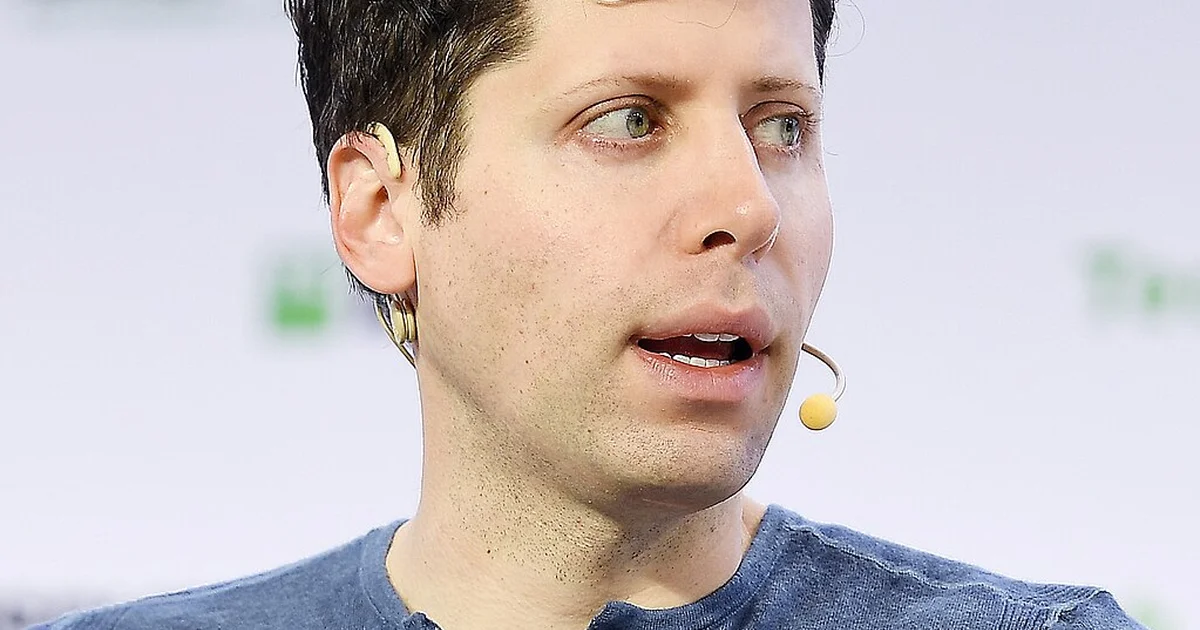
Sam Altman, ChatGPT, and the Future of AI Monetization
If you’ve ever watched a CFO’s eyebrow twitch at the word ads, you’ll appreciate this: Sam Altman, the OpenAI CEO who once called advertising a last resort and uniquely unsettling, is now publicly warming to the idea that, just maybe, ads don’t always suck. For operators who live and die by the forecast, this isn’t just a philosophical shift — it’s a signal that the AI monetization playbook is about to get rewritten, and your pipeline math needs to keep up.
Let’s break down what’s changed, why it matters, and how to model the impact before your board asks.
What’s Actually Happening?
OpenAI, the company behind ChatGPT, is preparing to introduce advertising — or at least ad-adjacent monetization — into its flagship product. Altman’s public stance has shifted from ads are a tax to Instagram ads actually add value for me, and internal documents reportedly target $1B in new revenue from free user monetization (read: ads) in 2026. The company is hiring for ad product roles and exploring models that blend affiliate, commerce, and potentially more traditional ad formats.
The rationale? With 800 million users and a plateauing pool of paid subscribers, OpenAI needs a scalable, non-intrusive way to monetize the free tier. Altman’s new line: if ads are done right — relevant, non-interruptive, and value-adding — they can be a net positive for users and the business.
Why Does This Matter for GTM, Finance, and Customer Experience?
- For Marketers: A new, high-intent channel is about to open — but with unknown targeting, measurement, and creative constraints. Early movers will get signal advantage, but only if they can prove incrementality and avoid cannibalizing existing channels.
- For Sales: Expect questions about lead quality, attribution, and whether ChatGPT-driven pipeline is net-new or just reshuffled demand. If you can’t track it in CRM, it doesn’t exist.
- For Finance: The CAC math changes. If ChatGPT ads deliver lower-cost, higher-intent leads, CAC payback could compress — but only if you can isolate the effect and avoid double-counting. If not, you risk a new flavor of ad waste at AI scale.
- For Customers: The risk is trust erosion. If ads degrade the user experience or introduce bias, NRR and retention will suffer. If they’re genuinely helpful (think: Instagram for B2B research), you might see higher engagement and faster sales cycles.
Sloane’s Model: Assumptions, Math, and Sensitivities
Assumptions
- ChatGPT launches a pilot ad product in Q1 2026, targeting B2B and B2C buyers.
- CPMs start at $30 (premium, high-intent context).
- Click-through rates (CTR) are 2x industry average (let’s say 2%) due to context relevance.
- Conversion rates (CVR) are 1.5x your current paid search (assume 6% vs. 4%).
- Attribution is last-click by default, with limited multi-touch visibility at launch.
Directional Math
- For every $10,000 spent:
- Impressions: 333,333
- Clicks: 6,667
- Conversions: 400
- CAC: $25 (if all conversions are net-new and close at your average rate)
- Sensitivity: If only 50% of conversions are incremental (the rest would have come via organic or other paid), true CAC doubles to $50.
- Payback: If your average deal is $1,000 and gross margin is 80%, payback is 0.06 months (if incremental) or 0.12 months (if 50% overlap).
Risks and Confounders
- Attribution contamination: Without robust incrementality testing (geo holdouts, time-based splits), you’ll overstate impact.
- User trust: If ads are poorly targeted or intrusive, expect a spike in churn and negative NPS.
- Vendor sprawl: Another channel means another dashboard, another set of tags, and more reconciliation headaches — unless you consolidate reporting and enforce CRM hygiene.
- Regulatory/data: Consent, retention, and data sharing with OpenAI must be DPIA-ready. If you can’t audit what’s being shown or tracked, your CISO will block the pilot.
What to Pilot in the Next 2–3 Weeks
- Run a Sensitivity Analysis: Model what happens to CAC payback and pipeline quality if ChatGPT ads deliver 25%, 50%, or 75% incremental leads. Use your current paid search and social as benchmarks.
- Design an Incrementality Test: If/when the channel opens, set up geo or audience holdouts. Don’t trust platform-reported conversions — run your own matchback to closed-won in CRM.
- Prep Your Data Flows: Map how ChatGPT-sourced leads will enter your CRM. Define required fields, source tags, and SLAs for follow-up. If Sales can’t see it, it didn’t happen.
- Draft a Board-Grade Brief: Summarize the opportunity, model the upside/downside, and list the gating risks (attribution, data, trust). Be ready to defend your assumptions in the next pipeline review.
What Good Looks Like
- CAC payback compresses by at least 10% vs. your current paid channels, with no drop in NRR or win rate.
- Incrementality is proven via holdouts, not just platform claims.
- Sales cycle shortens for ChatGPT-sourced leads, or at minimum, doesn’t lengthen.
- No spike in opt-outs, complaints, or negative NPS attributable to ad exposure.
What Could Go Wrong — and How You’ll Know
- Attribution mirage: If your pipeline spikes but closed-won doesn’t, you’re double-counting.
- User backlash: If you see a drop in engagement or a rise in unsubscribes, the ads are hurting trust.
- Finance pushback: If you can’t show incremental revenue or CAC improvement, expect budget to get pulled.
- Security/Compliance red flags: If you can’t document data flows and consent, you’ll get blocked before you start.
Bottom Line
Sam Altman’s pivot isn’t just a headline — it’s a new variable in your GTM equation. Treat ChatGPT ads like any other experiment: model the upside, isolate the effect, and kill it fast if the math doesn’t work. Board-grade means assumptions up front, sensitivity on page one, and a pilot plan that can survive a CFO’s red pen. If you can’t prove it shortens time-to-revenue, it’s a hobby, not a plan.