The AI Resume and Digital Reputation in 2025
Let’s talk about resumes. Not the kind you sweated over in college, tweaking your “proficient in Microsoft Office” line until it sounded like you could hack the Pentagon. I’m talking about the new resume — the one you didn’t write, but that’s already out there, being read by the most influential gatekeepers in business today: AI engines.
Welcome to 2025, where your “AI resume” is the digital equivalent of showing up to a black-tie gala in sweatpants — or a tuxedo — and you don’t even know which you’re wearing. The machines do. And they’re whispering about you in every boardroom, investor call, and talent search you care about.
If you’re an SEO pro, you might be feeling a little like the kid who brought a chessboard to a poker night. For years, you optimized for Google’s blue links, chased keywords like a caffeinated squirrel, and maybe even won a few “featured snippets” trophies to hang on your virtual mantle. But now? The game has changed. The table is round, the dealer is an LLM, and the stakes are your reputation, your brand, and — if you play it right — your ticket to the C-suite.
Let’s break this down, Jon-style.
The AI Resume: Your New Digital Business Card (Whether You Like It or Not)
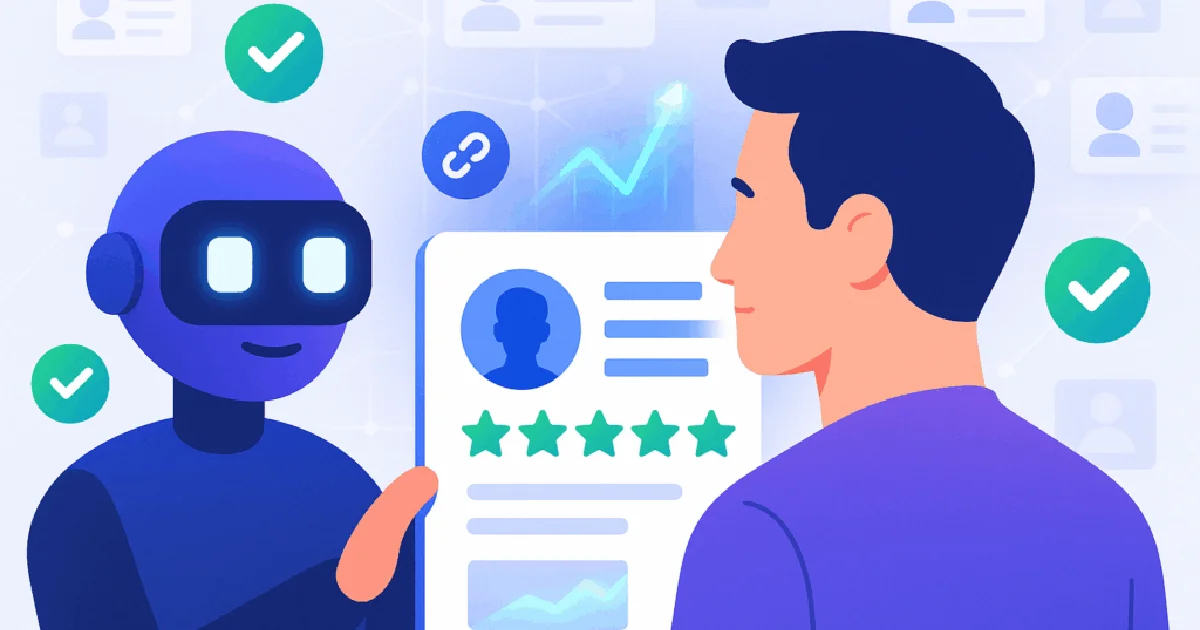
Here’s the plot twist: when someone — a client, investor, or that recruiter who keeps DMing you about “exciting opportunities” — wants to know who you are, they’re not just Googling you. They’re asking ChatGPT, Perplexity, Gemini, or whatever AI assistant is embedded in their workflow. And what comes back isn’t your LinkedIn profile or your carefully curated About page. It’s a synthesized, AI-generated summary of your professional life, your brand, your wins, your skeletons, and yes, your typos.
This isn’t a static snapshot. It’s a living, breathing, interactive dossier. Ask the AI about you, and it doesn’t just spit out your job title — it offers a narrative, suggests follow-up questions, and invites the user down a conversational rabbit hole. Suddenly, your “brand SERP” (remember when that was the hot topic?) is just the appetizer. The AI resume is the main course, dessert, and the after-dinner gossip.
Why Should Marketers and SEOs Care?
Because this is the new zero-sum moment. The AI resume is the bottom-of-funnel asset that gets consulted at the exact moment of decision. It’s the digital due diligence that happens before the deal is signed, the funds are wired, or the job offer is sent. And unlike the old days, you don’t get to control the narrative with a slick landing page or a well-timed press release. The AI is pulling from your entire digital footprint — articles, reviews, social posts, Glassdoor rants, and that Medium post you wrote in 2018 about “hustle culture” (cringe).
If your story is inconsistent, outdated, or — worst of all — boring, the AI will surface it. If you’ve been building a real, authentic, and authoritative presence, the AI will reward you. If you’ve been gaming the system with keyword stuffing and link schemes, well… the machines are onto you, and they’re not impressed.
The New Playbook: Engineering Your AI Resume
So, what’s a savvy marketer or SEO to do? Here’s where the fun begins.
- Think Like a Brand, Not a Tactician. Your name is now a brand query. Optimize it like you would a product launch. What’s the narrative? What’s the proof? What’s the story AI will tell about you when you’re not in the room?
- Authority Signals Are Everything. It’s not just about keywords anymore. It’s about digital authority: thought leadership, citations, conference talks, testimonials, and a consistent presence across platforms. If you’re not publishing, speaking, or being referenced, you’re invisible to the machines.
- Structure for Humans and Machines. Your LinkedIn, personal site, and even your tweets need to be clear, consistent, and rich in context. Avoid jargon for the sake of jargon (unless you want the AI to summarize you as “another buzzword generator”). Use real metrics, real outcomes, and real stories.
- Monitor and Adapt. Google yourself. Ask ChatGPT about yourself. See what comes up. If the AI resume isn’t telling the story you want, it’s time to get to work. This isn’t “set and forget” — it’s “iterate and improve.”
- Lead with Vision, Not Just Execution. The C-suite isn’t looking for someone who can tweak meta tags. They want leaders who can drive transformation, inspire teams, and see around corners. Make sure your digital footprint reflects that.
Why This Is a Big Deal (And Not Just for SEOs)
This shift isn’t just about personal branding. It’s about how trust, reputation, and authority are being redefined in the age of AI. The old playbook — optimize for Google, climb the rankings, collect your bonus — is being replaced by a new mandate: be discoverable, be credible, be memorable, and be real.
For marketers, this means the funnel is now a Möbius strip. The journey doesn’t end at the website; it loops through AI engines, social proof, and digital reputation checks. Every touchpoint is a potential “moment of truth,” and the AI resume is the ultimate litmus test.
For brands, it means your story is being told — and retold — by machines that don’t care about your ad spend or your agency’s Cannes Lions. They care about consistency, authority, and authenticity. If you’re not engineering your AI resume, you’re leaving your fate to the algorithmic winds.
Jon’s Take: The Opportunity (and the Risk)
Look, I’ve been in enough boardrooms to know that most execs still think SEO is about “getting us to the top of Google.” That’s like thinking the secret to winning the Tour de France is buying a better bike. The real race is happening in the AI layer — where your brand, your leadership, and your strategy are being summarized, critiqued, and recommended (or not) by the world’s most influential digital gatekeepers.
The opportunity? If you’re an SEO or marketer who gets this, you’re not just a tactician — you’re a strategist. You’re the person who can bridge the gap between brand, technology, and reputation. You’re the one who can walk into the C-suite and say, “Here’s how we make sure the machines tell the story we want — and why it matters for revenue, recruiting, and resilience.”
The risk? If you ignore this, you’ll wake up one day to find that your “digital business card” is a patchwork of outdated bios, conflicting narratives, and a few snarky Reddit threads. And the AI will serve it up, piping hot, to your next big prospect.
Final Thought
In the age of AI, your resume isn’t what you write — it’s what the world (and the machines) say about you. So, ask yourself: if the algorithm is the new headhunter, are you ready for your interview?
Remember, marketing is a marathon with weekly sprints. The finish line keeps moving, and the crowd is now made of algorithms. Run smart, run authentic, and make sure your story is the one worth telling — by humans and machines alike.
Now, go Google yourself. Or better yet, ask ChatGPT. The future of your career might just depend on the answer.