Retargeting Profitability: Risks, Outcomes, and Boardroom Math
Stakes and Outcome
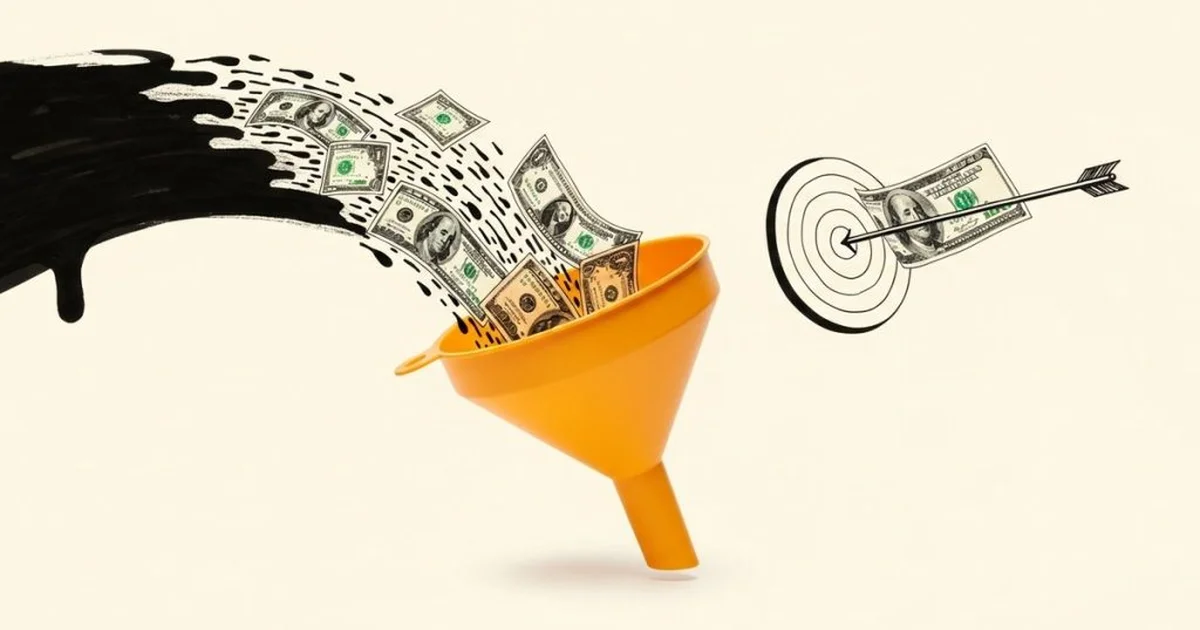
Retargeting is the darling of digital marketing dashboards. On paper, it delivers conversion rates 2–3x higher than cold prospecting, with CACs that look 30–50% lower. But here’s the risk: what looks like a profit engine is often a mirage—masking wasted spend, inflated ROAS, and a false sense of pipeline health. If you can’t defend your retargeting math in a boardroom—assumptions, sensitivities, and all—you’re at risk of overfunding a channel that quietly erodes margin and distorts your forecast.
Specific Outcome: Enable operators to model the true incremental value of retargeting, avoid double-counting conversions, and reallocate budget to channels that actually shorten CAC payback and drive net new revenue.
Model and Framework: How to Think About Retargeting Profitability
Assumptions
- Retargeting targets users who already know your brand (site visitors, cart abandoners, etc.).
- Most retargeting platforms optimize for last-touch attribution.
- Conversion rates for retargeting are typically 2–3x higher than cold traffic (source: Meta, Unbounce, WebFX).
- Average retargeting CPMs are 20–100% higher than cold traffic due to smaller, higher-intent audiences (LinkedIn thread).
The Core Problem
Retargeting looks profitable because it captures users already on the path to conversion. But most reporting ignores two things:
- Incrementality: How many of these conversions would have happened anyway, without the retargeting ad?
- Data Leakage: Incomplete or delayed conversion data means you keep retargeting users who already bought—wasting budget and inflating ROAS (TrackBee).
Framework
- Incremental Lift = (Retargeted Conversion Rate – Baseline Conversion Rate) × Audience Size
- True CAC = Retargeting Spend / Incremental Conversions
- Payback Sensitivity = (Gross Margin per Order – True CAC) / Gross Margin per Order
If your incremental lift is less than 50%, your “profitable” retargeting is mostly cannibalizing organic or direct conversions.
Data and Benchmarks: What’s Normal? What’s Exceptional?
- Baseline:
- 6.6% average landing page conversion rate (all traffic, Unbounce)
- Retargeting conversion rates: 10–15% (Meta, WebFX)
- 70% higher likelihood to convert after seeing a retargeted ad (WebFX)
- 1 in 4 consumers will return to a site after retargeting (Invesp)
- But—Incrementality Reality Check:
- Stanford GSB study: Only ~15% of retargeted users return because of the ad (Stanford GSB)
- Neil Patel: Display retargeting conversion rates average less than 1%—most “lift” is from high-intent segments, not broad retargeting (Neil Patel)
- TrackBee: 10–30% of retargeting impressions are wasted on existing customers due to incomplete data (TrackBee)
- Cost Sensitivities:
- CPMs for retargeting can be 2–3x higher than cold traffic if audience is small or highly competitive (LinkedIn)
- If your retargeting pool is less than 10,000 users, expect diminishing returns and rising costs per incremental conversion.
Sensitivity Table
| Scenario | Retargeting Conv. Rate | Baseline Conv. Rate | Incremental Lift | CPM ($) | True CAC ($) | Payback (mo) |
|---|---|---|---|---|---|---|
| Best-case (clean data) | 12% | 6% | 6% | 8 | 30 | 2.5 |
| Typical (some overlap) | 10% | 7% | 3% | 10 | 50 | 4.0 |
| Worst-case (bad data) | 9% | 8% | 1% | 12 | 90 | 7.0+ |
Assume $100 average order value, 60% gross margin, $10K monthly retargeting spend, 10,000 audience size.
Pilot Plan: 2–3 Week Implementation
Objective
Measure the incremental impact of retargeting on conversion and CAC payback.

Why Retargeting Looks Profitable (and Isn’t)
Steps
- Audience Segmentation:
- Split your retargeting pool into two: Test (exposed to ads) and Holdout (no ads).
- Exclude all users who converted in the last 30 days (server-side, not just pixel-based).
- Tracking Setup:
- Use server-side tagging to ensure conversion events are captured instantly and consistently across platforms (CHEQ, TrackBee).
- Build a daily dashboard: impressions, clicks, conversions (by segment), spend, and overlap with existing customers.
- Run the Test:
- Allocate 20% of your retargeting budget to the holdout group.
- Run for 2–3 weeks, minimum 1,000 conversions per group for statistical significance.
- Analyze Results:
- Calculate incremental conversions: (Test group conversions – Holdout group conversions).
- Recalculate CAC and payback using only incremental conversions.
- Report: “If we paused retargeting, what % of conversions would we actually lose?”
- Decision:
- If incremental CAC payback is more than 20% worse than blended CAC, reallocate budget to higher-lift channels.
- If incremental lift is less than 3%, cut retargeting spend by 50% and reinvest in prospecting or lifecycle marketing.
Risks and Mitigations
| Risk | Mitigation |
|---|---|
| Data leakage (retargeting buyers) | Server-side conversion tracking; daily exclusion list updates |
| Audience overlap (double-counting) | Strict audience segmentation; holdout methodology |
| Small sample size (statistical noise) | Minimum 1,000 conversions per group; extend test if needed |
| Platform reporting bias | Use independent analytics (not just ad platform data) |
| Short-term revenue dip | Model impact on pipeline; communicate test rationale to Sales/Finance |
Bottom Line
Retargeting looks profitable because it’s easy to attribute conversions to the last ad touch. But unless you model for incrementality and data hygiene, you’re likely overstating its impact—sometimes by 50% or more. The only retargeting that’s truly profitable is the kind you can defend, line by line, in a board meeting: incremental, clean, and with CAC payback that beats your blended average.
Recommendation
Run the pilot. Show the math. If retargeting doesn’t move the needle on incremental revenue or CAC payback, kill it—or at least cut it in half. Reallocate to channels that actually drive net new pipeline.
Model or it didn’t happen.